

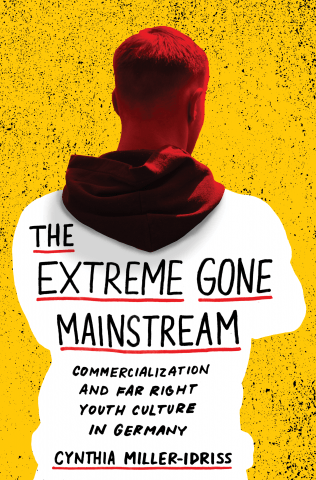
Commercialization and Far Right Youth Culture in Germany

Sociologist Cynthia Miller-Idriss argues how brands sneak past German laws against Nazi symbols while building a community among customers.
The Extreme Gone Mainstream: Commercialization and Far Right Youth Culture in Germany.

The Extreme Gone Mainstream: Commercialization and Far Right Youth Culture in Germany
Cynthia Miller-Idriss
Princeton University Press

In 2002, a German company called Thor Steinar released its first catalog of clothing branded with references—some subtle, some less so—to European far-right ideology. Soon, Thor Steinar stores were popping up in major German cities; for €80, you could buy a pair of “Rudolf” jeans, named after Adolf Hitler’s deputy, Rudolf Hess. The success of Thor Steinar “rapidly and literally transformed the face of the European extreme right,” argues sociologist Cynthia Miller-Idriss in The Extreme Gone Mainstream. Gone are the days of neo-Nazis in near-identical combat boots, suspenders, and bomber jackets. Instead, far-right shoppers take their pick from stylish brands that pepper their clothes with coded nods to Nazism, anti-Semitism, and Norse imagery. These brands sneak past German laws against Nazi symbols while building a community among customers, and especially among the youth.

A version of this story originally appeared in the February 2018 issue of Pacific Standard. Subscribe now and get eight issues/year or purchase a single copy of the magazine.


Related Posts

Prisons have no incentive to pay inmates better—to the contrary. Unlike workers in the free market, who (theoretically, anyway) can weigh factors like pay, working conditions, and other benefits when deciding where to work, inmates do not have a choice between employers. If they need the money, or the experience, they must take or leave what the prison is offering.

The Death Penalty in America: A Lethal History

In colonial Virginia, authorities could hang settlers for a crime as small as stealing grapes or killing a neighbor's chicken. The penal code in America's first colony was, in fact, so harsh its governor eventually reduced the number of capital offenses out of fear that settlers would refuse to live there. Since then, the number and severity of crimes punishable by death in the United States have fluctuated; today, the death penalty is still legal in 31 states. Here are some of the critical turning points in the history of capital punishment in America.
See More